ES EspañolEN English
Skip to content
Sergio DolzTRAIN
BasketballBeginnerFree routine

Basketball · first steps with the ball

Nine blocks to learn dribbling, footwork and close-range shooting. Work slowly and finish each attempt balanced. The session includes preparation and supplementary low-load movements. You may split them up or shorten the session according to tolerance.

Read the workout without signing up. The app adds a timer, set logging and access to your activity.

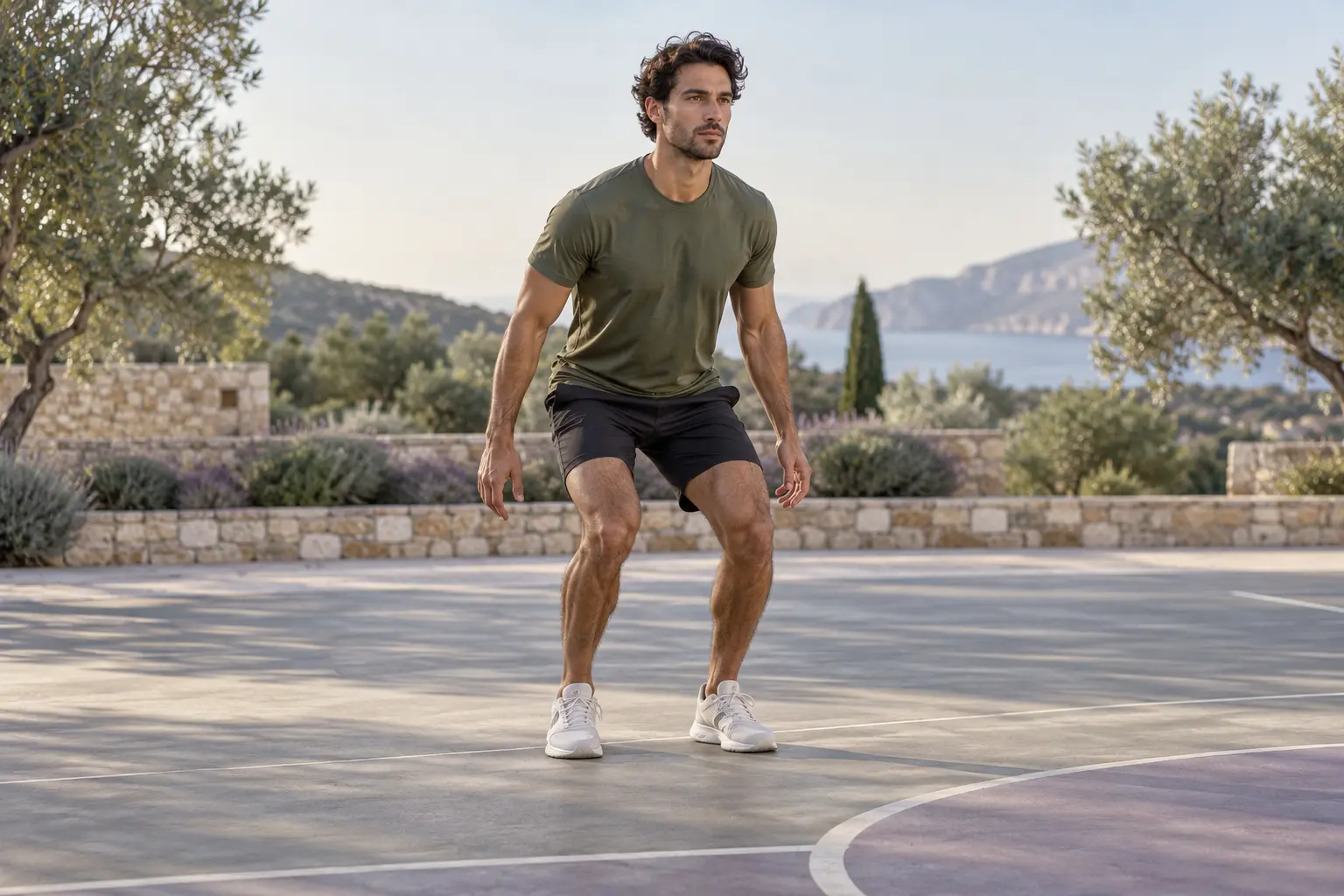
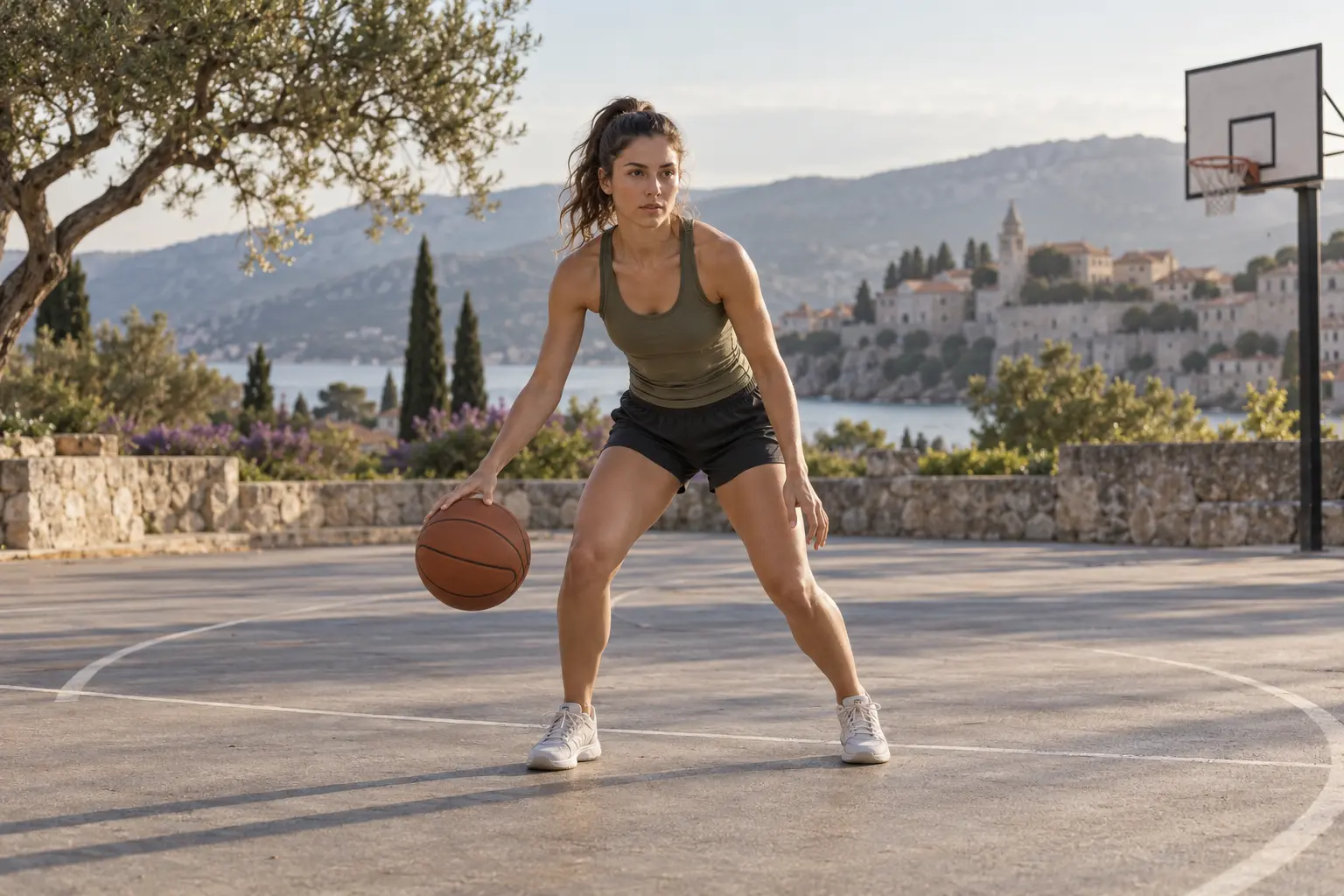
A person practising basketball on a court. AI-generated image.
Approximate duration
40 min
Level
Beginner
Session
9 exercises
Demonstrations
9 with video

Prepare your workout

Equipment
Ball, Basket and Clear court; Guide for signals and layup coordination; Stable wall for supplementary exercises
Before you choose
No competitive experience required; an adult or coach must guide and keep the space safe. For minors, a coach adapts ball, basket, opposition and amount to age, maturation and weekly load; these minutes are not an automatic prescription for adolescents.
Intensity
Comfortable effort, 2–4/10. Aim to learn rather than speed up for more repetitions.
Warm-up
Before the session, complete one gentle round of the three listed movements. Allow about 6 minutes for preparation, transitions and rehearsing the first exercise; extend this if needed. Rehearse the first exercise with light resistance before its sets, keeping breathing comfortable.

Duration is approximate. Prepare your equipment and take the indicated rests; needing more rest can make the workout longer.

PREPARE TO MOVE

Your warm-up

Start with this gentle preparation before your working sets. The listed duration includes the warm-up.

  1. Knee-raise march

    60–90 s at a comfortable pace

    Stand in a clear area to march on the spot or move slowly forward. Raise one knee comfortably, coordinating the opposite arm. Place the foot down with control and alternate in a steady rhythm.

    What you train: Trains arm-leg coordination and balance while raising each knee.

    Watch video
  2. Controlled lateral movement

    2 short walking lengths, stopping with control

    Stand on level ground with clear space on both sides. Take short, controlled sideways steps without crossing your feet. Brake to a steady stop, then change direction.

    What you train: Trains sideways movement, braking and foot placement.

    Watch video
  3. Supported toe raise

    1 × 5 gentle repetitions per side

    Stand beside a fixed support with both heels grounded. Lift the fronts of your feet without shifting your body back. Slowly lower until your whole feet rest on the floor.

    What you train: Strengthens the front lower-leg muscles that lift your toes while walking.

    Watch video
STEP BY STEP

Your complete workout

9 exercises
  1. One-hand low dribble

    2 × 20 s each hand

    How to do it
    1. Stand with feet apart, knees softly bent and the ball at your side.
    2. Dribble low with one hand, guiding with fingers while looking forward.
    3. Keep the ball close to your side; change hands after the set.

    What it trainsTrains one-hand ball control while watching the game.

    Rest
    Use 25 s as a guide for rest between rounds; extend it if needed. The 3 min block includes attempts, rests, role changes and one correction.
    Tempo
    Gentle technical work; effort 2–4/10.
    The movement, step by step

    Dribble low with one hand, knees comfortably bent and eyes forwards. Keep the ball beside your body and change hands when the bout ends.

    Technique cueUse the free hand to protect the ball without pushing anyone.

    Watch the demonstration for One-hand low dribbleJr. NBA · Audio not verified; written guide in English · Opens a new tab
    Source and verificationOpen the original source

    Official page, block title, instructions and video link/iframe match. Audiovisual playback, duration and spoken language were not checked. YouTube metadata (title, channel and offered player) checked on 2026-10-01. This check does not certify full playback.

    Date checked:

    The linked video covers low dribbling. Reading numbers is a progression described in the curriculum, not a second verified video.

    Variations and mistakes to avoid
    More accessible
    Practise for 10 seconds, catch the ball and start again.
    To progress
    A partner shows numbers; name them without stopping the dribble.
    Avoid this mistake
    Stiffly slapping with the palm or looking at the floor throughout.
    View exercise guide
  2. Stationary crossover at different heights

    3 × 20 s, one height per round

    How to do it
    1. Stay still with feet apart, soft knees and the ball in front.
    2. Bounce diagonally to the other hand and back, keeping your chest forward.
    3. Alternate low, knee-height and slightly higher crossovers with control.

    What it trainsTrains changes of hand at different heights with stable foot positioning.

    Rest
    Use 40 s as a guide for rest between rounds; extend it if needed. The 3 min block includes attempts, rests, role changes and one correction.
    Tempo
    Gentle technical work, 3–4/10.
    The movement, step by step

    Without moving your feet, switch the ball from one hand to the other in front of your body. Practise low first, then at knee height and finally a little higher.

    Technique cueKeep the crossover in front and within comfortable reach.

    Watch the demonstration for Stationary crossover at different heightsJr. NBA · Audio not verified; written guide in English · Opens a new tab
    Source and verificationOpen the original source

    Official page, block title, instructions and video link/iframe match. Audiovisual playback, duration and spoken language were not checked. YouTube metadata (title, channel and offered player) checked on 2026-10-01. This check does not certify full playback.

    Date checked:

    Demonstration published by Jr. NBA. Follow this session's prescription; card progressions are not presented as variations observed in the video.

    Variations and mistakes to avoid
    More accessible
    Make one switch, catch the ball and reset.
    To progress
    Change height on the coach's signal without speeding up uncontrollably.
    Avoid this mistake
    Crossing the ball too far away and chasing it with your body.
    View exercise guide
  3. Quarter-turn front pivot

    2 rounds of four pivots per foot

    How to do it
    1. Hold the ball without dribbling; choose a pivot foot with space to turn.
    2. Move the free foot forward in quarter-turns without shifting your pivot foot.
    3. Complete four turns and repeat with the other pivot foot.

    What it trainsTrains balanced front pivots while holding the ball.

    Rest
    Use 25 s as a guide for rest between rounds; extend it if needed. The 3 min block includes attempts, rests, role changes and one correction.
    Tempo
    Gentle technical work, 2–3/10.
    The movement, step by step

    Hold the ball without dribbling. Keep one pivot foot fixed and make four forward quarter-turns until you face forwards again. Repeat with the other foot.

    Technique cueThe pivot foot rotates on its spot without changing location.

    Watch the demonstration for Quarter-turn front pivotJr. NBA · Audio not verified; written guide in English · Opens a new tab
    Source and verificationOpen the original source

    Official page, block title, instructions and video link/iframe match. Audiovisual playback, duration and spoken language were not checked. YouTube metadata (title, channel and offered player) checked on 2026-10-01. This check does not certify full playback.

    Date checked:

    Demonstration published by Jr. NBA. Follow this session's prescription; card progressions are not presented as variations observed in the video.

    Variations and mistakes to avoid
    More accessible
    Practise without the ball and stop after each quarter-turn.
    To progress
    Add a signal indicating which foot to start with; then link to a pass.
    Avoid this mistake
    Changing your pivot foot halfway round.
    View exercise guide
  4. Quarter-turn reverse pivot

    2 rounds of four pivots per foot

    How to do it
    1. Hold the ball, choose a pivot foot and check the space behind you.
    2. Step the free foot back for a quarter-turn while keeping the pivot fixed.
    3. Complete four turns, regain balance and change feet.

    What it trainsTrains ball protection and changes of direction through reverse pivots.

    Rest
    Use 25 s as a guide for rest between rounds; extend it if needed. The 3 min block includes attempts, rests, role changes and one correction.
    Tempo
    Gentle technical work, 2–3/10.
    The movement, step by step

    Hold the ball with one pivot foot fixed and turn backwards in four quarter-turns. Check your balance between steps and repeat with the other foot.

    Technique cueCheck the space before stepping backwards.

    Watch the demonstration for Quarter-turn reverse pivotJr. NBA · Audio not verified; written guide in English · Opens a new tab
    Source and verificationOpen the original source

    Official page, block title, instructions and video link/iframe match. Audiovisual playback, duration and spoken language were not checked. YouTube metadata (title, channel and offered player) checked on 2026-10-01. This check does not certify full playback.

    Date checked:

    Demonstration published by Jr. NBA. Follow this session's prescription; card progressions are not presented as variations observed in the video.

    Variations and mistakes to avoid
    More accessible
    Practise a quarter-turn without the ball and return to the start.
    To progress
    Combine a forward or reverse pivot according to a partner's signal.
    Avoid this mistake
    Dragging the pivot foot or turning towards someone nearby.
    View exercise guide
  5. Close-range shot with guide hand

    3 × 5 close-range attempts

    How to do it
    1. Stand near the basket with shooting hand below the ball and guide hand beside it.
    2. Extend legs and shooting arm; the guide hand supports without pushing.
    3. Hold the follow-through and collect the rebound when space is clear.

    What it trainsTrains repeatable coordination of legs, shooting arm and guide hand.

    Rest
    Use 40 s as a guide for rest between rounds; extend it if needed. The 4 min block includes attempts, rests, role changes and one correction.
    Tempo
    Gentle technical work, 2–4/10.
    The movement, step by step

    Near the basket, place your shooting hand under the ball and the other at its side as a guide. Coordinate leg and arm extension and hold your follow-through.

    Technique cueStay close enough to shoot without straining the movement.

    Watch the demonstration for Close-range shot with guide handJr. NBA · Audio not verified; written guide in English · Opens a new tab
    Source and verificationOpen the original source

    Instructions and iframe 7OT3vgmBnhA from Form Shooting-2 Hands in the official Starter 8 plan. The individual video page links a different ID; this retains the ID from the followed plan. Playback and language not checked. YouTube metadata (title, channel and offered player) checked on 2026-10-01. This check does not certify full playback.

    Date checked:

    Demonstration published by Jr. NBA. Follow this session's prescription; card progressions are not presented as variations observed in the video.

    Variations and mistakes to avoid
    More accessible
    Move closer or use an adapted ball and basket height.
    To progress
    Step further away only if you preserve the movement and balance.
    Avoid this mistake
    Moving so far away that you need to throw with your whole body.
    View exercise guide
  6. No-ball layup: two steps and opposite hand

    2 × 4 repetitions per side, without a ball

    How to do it
    1. Face a coach without a ball; they offer a hand at a reachable height.
    2. From the right, step right then left; jump off the left and raise your right hand.
    3. Land with control; reverse feet and hand from the left.

    What it trainsTrains layup footwork and coordination between take-off leg and finishing hand.

    Rest
    Use 30 s as a guide for rest between rounds; extend it if needed. The 4 min block includes attempts, rests, role changes and one correction.
    Tempo
    Gentle technical work, 3–4/10.
    The movement, step by step

    For a right-handed layup, step right, then left, and jump while reaching your right hand towards the coach's hand. Repeat on the other side, reversing feet and hand.

    Technique cueRaise the hand opposite the foot you jump from.

    Watch the demonstration for No-ball layup: two steps and opposite handJr. NBA · Audio not verified; written guide in English · Opens a new tab
    Source and verificationOpen the original source

    Official page, block title, instructions and video link/iframe match. Audiovisual playback, duration and spoken language were not checked. YouTube metadata (title, channel and offered player) checked on 2026-10-01. This check does not certify full playback.

    Date checked:

    This video teaches coordination WITHOUT a ball. The card does not present it as a dribbling layup or basket-shooting demonstration.

    Variations and mistakes to avoid
    More accessible
    Practise walking without jumping before linking the movement.
    To progress
    Add a small, flowing jump without changing the coordination.
    Avoid this mistake
    Jumping off the foot and reaching with the hand on the same side.
    View exercise guide
  7. Defensive stance and movement on cue

    3 × 20 s responding to slow signals

    How to do it
    1. Take a comfortable defensive stance in a clear sideways lane.
    2. Move towards the guide's signal, keeping space between your feet.
    3. Brake before changing sides; raise a hand to contest a shot fake.

    What it trainsTrains reaction, defensive movement and response to a shot fake.

    Rest
    Use 40 s as a guide for rest between rounds; extend it if needed. The 3 min block includes attempts, rests, role changes and one correction.
    Tempo
    Gentle to moderate technical work, 3–5/10.
    The movement, step by step

    Adopt a comfortable defensive stance. Move sideways in the direction the leader signals and raise one hand to contest a shot fake.

    Technique cueMove feet in turn without crossing or bringing them together.

    Watch the demonstration for Defensive stance and movement on cueJr. NBA · Audio not verified; written guide in English · Opens a new tab
    Source and verificationOpen the original source

    Official page, block title, instructions and video link/iframe match. Audiovisual playback, duration and spoken language were not checked. YouTube metadata (title, channel and offered player) checked on 2026-10-01. This check does not certify full playback.

    Date checked:

    Uses the official drill's stance, lateral signal and contest technique; the verbal game is not needed for this session.

    Variations and mistakes to avoid
    More accessible
    Take two slow side steps and return to the centre.
    To progress
    The leader alternates direction and shot fakes without announcing the signal.
    Avoid this mistake
    Bringing the feet together or crossing them while following a signal that is too fast.
    View exercise guide
  8. Shoulder circles

    Additional exercise

    1 × 5

    How to do it
    1. Sit or stand with your arms relaxed at your sides.
    2. Make small, slow shoulder circles backwards.
    3. Reverse direction, then let your shoulders relax.

    What it trainsGently mobilises the shoulders and shoulder blades before activity.

    Rest
    Rest 30 s or longer until control returns.
    Tempo
    Controlled, without holding your breath
    The movement, step by step

    Sitting or standing, let your arms relax. Make small, slow circles with your shoulders backwards, then forwards.

    Technique cueKeep your head still and breathe naturally.

    Watch the demonstration for Shoulder circlesBromley Healthcare · English · Opens a new tab
    Source and verificationOpen the original source

    Technical reference from the stated source. YouTube metadata (title, channel and offered player) checked on 2026-10-01. This check does not certify full playback.

    Date checked:

    Variations and mistakes to avoid
    More accessible
    Make smaller circles.
    To progress
    Make the circles larger only within a comfortable range of movement.
    Avoid this mistake
    Moving abruptly or tensing your neck.
    View exercise guide
  9. Supported ankle mobility

    Additional exercise

    1 × 5

    How to do it
    1. Place one foot near a wall with the whole sole grounded.
    2. Move your knee forward in line with your toes, keeping the heel down.
    3. Return slowly and repeat with the other ankle.

    What it trainsTrains ankle mobility with the foot grounded.

    Rest
    Rest 30 s or longer until control returns.
    Tempo
    Controlled, without holding your breath
    The movement, step by step

    With your foot planted near a wall, move your knee forwards without lifting your heel. Return and repeat.

    Technique cueStay within a comfortable range; your knee need not touch the wall.

    Watch the demonstration for Supported ankle mobilityNHS University Hospitals Plymouth Physiotherapy · English · Opens a new tab
    Source and verificationOpen the original source

    Technical reference from the stated source. YouTube metadata (title, channel and offered player) checked on 2026-10-01. This check does not certify full playback.

    Date checked:

    Variations and mistakes to avoid
    More accessible
    Move your foot closer to the wall.
    To progress
    Move your foot slightly further away if you can keep your heel down.
    Avoid this mistake
    Forcing your ankle or rotating your foot to gain distance.
    View exercise guide

Sign in or create your free account to ask Sergio. Read replies in Account → Messages.

FINISH THE SESSION

Finish and prepare your next step.

Walk for 2 min, recording one skill achieved and one decision to improve.

How to progress

Repeat with control. In another session increase only dribbling time, shooting distance or cue variety.

Open workout in the app →

General routines for adults. If you have a health condition, an injury, are pregnant or have medical instructions, consult your professional before starting and ask for adaptations. Stop if you experience pain, dizziness or unusual breathlessness.