ES EspañolEN English
Skip to content
Sergio DolzTRAIN
StrengthBeginnerFree routine

Postpartum at home · progressive full-body strength

Ten low-impact movement options for a stage agreed with your professional. Split the session and do only tolerated tasks; completing everything is not compulsory. Strength and floor-based exercises require readiness for that stage, not an automatic date after birth.

Read the workout without signing up. The app adds a timer, set logging and access to your activity.

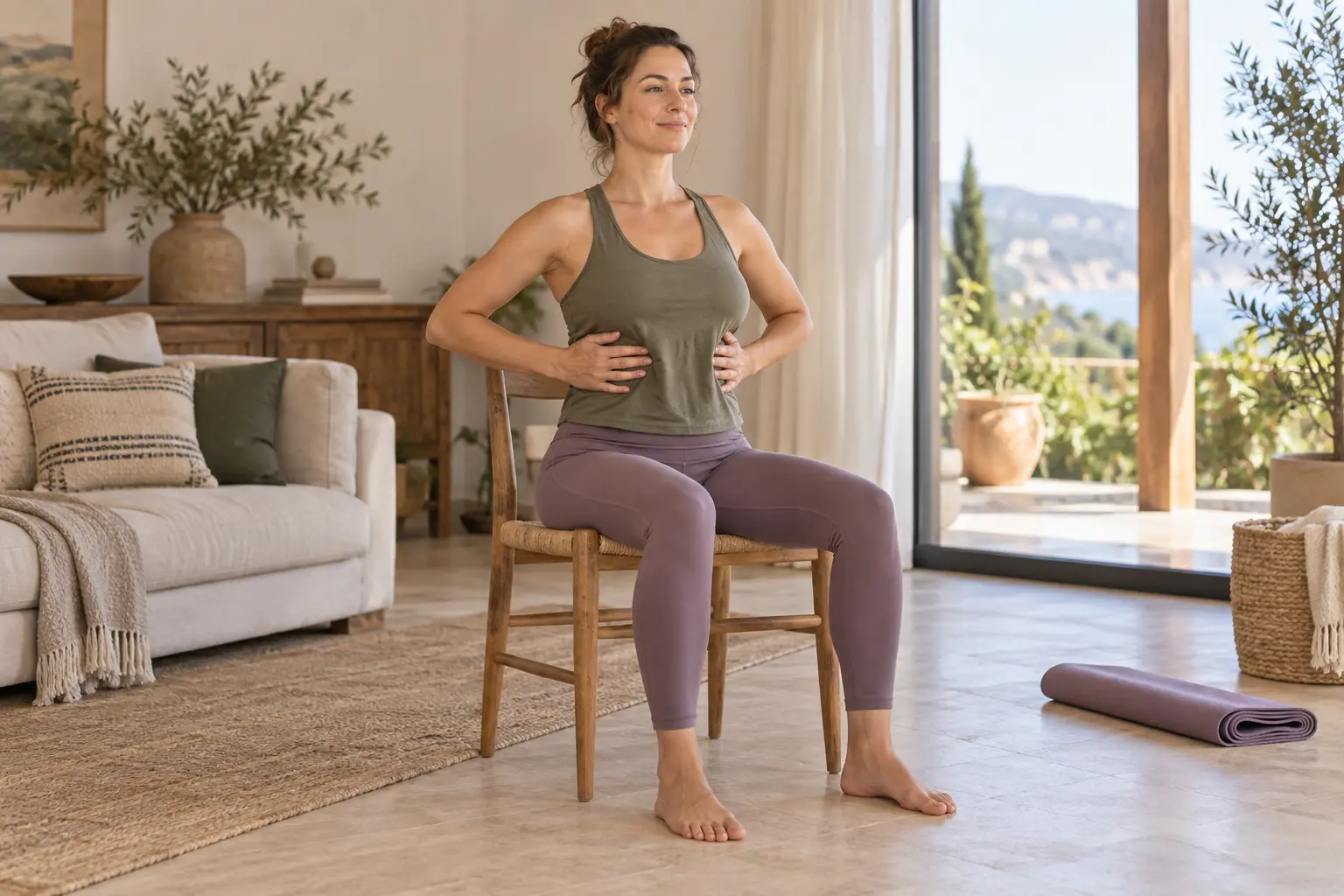
A woman returning to gentle movement at home. AI-generated image.
INDIVIDUAL ADAPTATION

Postnatal · recover at your own pace

No-impact options for a stage agreed with your midwife, obstetrician or pelvic floor physiotherapist. Having more movements available does not mean you must complete them all.

Before you begin. After an uncomplicated vaginal birth, gentle movement can resume as tolerated. A caesarean, tear, complications, pain or pelvic symptoms need specific guidance. A postnatal review helps decide progressions; it is not automatic clearance to jump or run.

Effort. Start with a few repetitions, comfortable breathing and rests as needed. Split the routine into small blocks. Avoid breath-holding and effort that causes pain, vaginal pressure, leakage, scar tension or abdominal doming.

Adaptations and sources
  • Breathing and pelvic floor: releasing completely matters. If it hurts or you cannot relax, do not keep contracting; request an assessment. Do not practise by stopping your urine flow.
  • Strength, bridge and hands-and-knees sessions are for a stage you already tolerate, with the wound protected and load restrictions respected. They are not automatically suitable immediately after birth.
  • Diastasis, prolapse, pelvic pain or incontinence require individual adjustments. No routine promises to correct them.
  • Returning to impact depends on symptoms, strength and individual assessment. The postnatal library does not include jumping or running.

When to stop. Stop and seek advice if bleeding increases or you experience pain, vaginal heaviness, leakage or changes to your scar. Heavy bleeding, chest pain, severe breathlessness, fainting, fever with feeling unwell, or pain and swelling in one calf require urgent attention; in an emergency, call 112.

Approximate duration
30 min
Level
Beginner
Session
10 exercises
Demonstrations
10 with video

Prepare your workout

Equipment
Stable chair, Wall; Light band or bottles only where specified; Mat if tolerated
Before you choose
Discuss your stage with your midwife, obstetrician or pelvic-floor physiotherapist. After a caesarean, tear, complication or pain, follow specific advice before strength or floor-based tasks.
Intensity
Gentle and adjustable: one short set per movement. No breath-holding, jumps, pain, vaginal pressure, leakage or scar tension. This is not treatment for diastasis or prolapse.
Warm-up
Preparation is already included at the start: Comfortable rib breathing · postpartum; Seated shoulder mobility · postpartum. Follow those blocks as prescribed and do not repeat them as extra work. Start with today's comfortable range and any breaks you need; you may stop here if this is enough.

Duration is approximate. Prepare your equipment and take the indicated rests; needing more rest can make the workout longer.

PREPARE TO MOVE

Your warm-up

These movements are already part of the workout. Do them in their scheduled place rather than repeating them as extra work.

  1. Comfortable rib breathing · postpartum

    5 calm breaths

    Sit with back supported or lie comfortably on your side. Breathe in gently, feeling the ribs open sideways. Exhale without tightening your tummy and complete five calm cycles.

    What you train: Practises comfortable rib breathing without straining the abdomen.

    Watch video See its place in the workout
  2. Seated shoulder mobility · postpartum

    3–5 comfortable repetitions; up to 5 breaths in breathing exercises

    Sit with feet grounded and arms relaxed. Make small backward shoulder circles. Release your shoulders between circles and breathe comfortably.

    What you train: Gently mobilises the shoulders and upper back without load.

    Watch video See its place in the workout
STEP BY STEP

Your complete workout

10 exercises
  1. Comfortable rib breathing · postpartum

    Recovery

    5 calm breaths

    How to do it
    1. Sit with back supported or lie comfortably on your side.
    2. Breathe in gently, feeling the ribs open sideways.
    3. Exhale without tightening your tummy and complete five calm cycles.

    What it trainsPractises comfortable rib breathing without straining the abdomen.

    Rest
    Rest 30 s or longer until control returns.
    Tempo
    Controlled, without holding your breath
    The movement, step by step

    Sit with support or lie on your side. Breathe in gently towards your ribs. Breathe out without forcing your abdomen. Take five calm breaths.

    Technique cueRelax your shoulders and avoid forced breaths.

    Watch the demonstration for Comfortable rib breathing · postpartumNHS Fife · Audio not verified; written guide in English · Opens a new tab
    Source and verificationOpen the original source

    Public source and video reference located; YouTube oEmbed HTTP 200 metadata (title: Lateral Breathing; channel: NHS Fife; player offered). Full playback and audio are not certified.

    Date checked:

    Breathe comfortably without straining your abdomen or holding your breath. The video supports movement technique, not clearance for a recovery stage or prescription. Postpartum, the card's gentle effort, exhalation, comfortable range and symptom criteria take priority.

    Variations and mistakes to avoid
    More accessible
    Reduce resistance and range; keep the movement comfortable and controlled.
    To progress
    Only after confirming tolerance with your professional, increase by a few repetitions or a little range. Do not automatically progress to jumping.
    Avoid this mistake
    Breathing quickly or forcing your abdomen.
    View exercise guide
  2. Seated shoulder mobility · postpartum

    Recovery

    3–5 comfortable repetitions; up to 5 breaths in breathing exercises

    How to do it
    1. Sit with feet grounded and arms relaxed.
    2. Make small backward shoulder circles.
    3. Release your shoulders between circles and breathe comfortably.

    What it trainsGently mobilises the shoulders and upper back without load.

    Rest
    Rest 30 s or longer until control returns.
    Tempo
    Controlled, without holding your breath
    The movement, step by step

    Sit with your feet supported and make small backwards shoulder circles, leaving your arms relaxed.

    Technique cueKeep your neck long and head still.

    Watch the demonstration for Seated shoulder mobility · postpartumBromley Healthcare · English · Opens a new tab
    Source and verificationOpen the original source

    Technical reference from the stated source. YouTube metadata (title, channel and offered player) checked on 2026-10-01. This check does not certify full playback.

    Date checked:

    General demonstration of the same movement. Postpartum, this card's gentle effort, comfortable range, exhalation and symptom criteria take priority; the video does not authorise a recovery stage or individual prescription.

    Variations and mistakes to avoid
    More accessible
    Reduce resistance and range; keep the movement comfortable and controlled.
    To progress
    Only after confirming tolerance with your professional, increase by a few repetitions or a little range. Do not automatically progress to jumping.
    Avoid this mistake
    Raising your shoulders with tension.
    View exercise guide
  3. Sit to stand with exhalation · postpartum

    Recovery

    3–5 comfortable repetitions; up to 5 breaths in breathing exercises

    How to do it
    1. Sit on a fixed chair, feet grounded; use hands or a higher seat if needed.
    2. Hinge slightly forward and stand while breathing out.
    3. Send hips back and sit slowly without wound tension.

    What it trainsWorks legs and glutes while coordinating effort with exhalation.

    Rest
    Rest 30 s or longer until control returns.
    Tempo
    Controlled, without holding your breath
    The movement, step by step

    From a fixed chair, lean forwards from your hips and stand as you breathe out; sit down slowly. Use your hands or a higher seat if needed.

    Technique cueBreathe through the effort and keep feet grounded.

    Watch the demonstration for Sit to stand with exhalation · postpartumKingston and Richmond NHS Foundation Trust · English · Opens a new tab
    Source and verificationOpen the original source

    Technical reference from the stated source. YouTube metadata (title, channel and offered player) checked on 2026-10-01. This check does not certify full playback.

    Date checked:

    General demonstration of the same movement. Postpartum, this card's gentle effort, comfortable range, exhalation and symptom criteria take priority; the video does not authorise a recovery stage or individual prescription.

    Variations and mistakes to avoid
    More accessible
    Reduce resistance and range; keep the movement comfortable and controlled.
    To progress
    Only after confirming tolerance with your professional, increase by a few repetitions or a little range. Do not automatically progress to jumping.
    Avoid this mistake
    Straining the wound or holding your breath.
    View exercise guide
  4. Short wall push-up · postpartum

    Recovery

    3–5 comfortable repetitions; up to 5 breaths in breathing exercises

    How to do it
    1. Face the wall with hands at chest height, head and trunk aligned.
    2. Slightly bend elbows to move your body towards the wall.
    3. Exhale as you push back without sagging.

    What it trainsWorks chest, triceps and shoulders through a short supported press.

    Rest
    Rest 30 s or longer until control returns.
    Tempo
    Controlled, without holding your breath
    The movement, step by step

    Place your hands on a wall at chest height. Bend your elbows slightly and push back as you breathe out, keeping your body aligned.

    Technique cueBring feet closer to the wall to reduce effort.

    Watch the demonstration for Short wall push-up · postpartumBESS - British Elbow & Shoulder Society · English · Opens a new tab
    Source and verificationOpen the original source

    Technical reference from the stated source. YouTube metadata (title, channel and offered player) checked on 2026-10-01. This check does not certify full playback.

    Date checked:

    General demonstration of the same movement. Postpartum, this card's gentle effort, comfortable range, exhalation and symptom criteria take priority; the video does not authorise a recovery stage or individual prescription.

    Variations and mistakes to avoid
    More accessible
    Reduce resistance and range; keep the movement comfortable and controlled.
    To progress
    Only after confirming tolerance with your professional, increase by a few repetitions or a little range. Do not automatically progress to jumping.
    Avoid this mistake
    Letting your waist sag or feeling vaginal pressure.
    View exercise guide
  5. Gentle seated band row · postpartum

    Recovery

    3–5 comfortable repetitions; up to 5 breaths in breathing exercises

    How to do it
    1. Sit with shoes on and a light, intact band around your soles.
    2. Hold the ends and gently pull towards your hips while exhaling.
    3. Slowly straighten your arms, controlling the band.

    What it trainsWorks the back and arms with a gentle pull and controlled return.

    Rest
    Rest 30 s or longer until control returns.
    Tempo
    Controlled, without holding your breath
    The movement, step by step

    Sit with shoes on and place an intact band around the soles of your feet. Pull gently towards your hips and return without releasing the tension.

    Technique cueCheck the grip; keep the band secure and away from your face.

    Watch the demonstration for Gentle seated band row · postpartumRoyal United Hospitals Bath NHS Foundation Trust · Audio not verified; written guide in English · Opens a new tab
    Source and verificationOpen the original source

    Public source and video reference located; YouTube oEmbed HTTP 200 metadata (title: Banded upward rows in sitting; channel: RoyalUnitedHospitalBath NHS Foundation Trust; player offered). Full playback and audio are not certified.

    Date checked:

    The resource is in a prenatal guide demonstrating the same movement. Its prenatal prescription should not automatically be applied postpartum. The video supports movement technique, not clearance for a recovery stage or prescription. Postpartum, the card's gentle effort, exhalation, comfortable range and symptom criteria take priority.

    Variations and mistakes to avoid
    More accessible
    Reduce resistance and range; keep the movement comfortable and controlled.
    To progress
    Only after confirming tolerance with your professional, increase by a few repetitions or a little range. Do not automatically progress to jumping.
    Avoid this mistake
    Jerking or holding your breath.
    View exercise guide
  6. Low bridge with exhalation · postpartum

    Recovery

    3–5 comfortable repetitions; up to 5 breaths in breathing exercises

    How to do it
    1. If this stage and position are tolerated, lie with knees bent and feet grounded.
    2. Exhale and lift your pelvis only slightly without arching.
    3. Lower slowly, breathing comfortably without abdominal doming.

    Keep in mind: Omit if pressure, pain, abdominal doming, wound tension or perineal tension occurs.

    What it trainsWorks glutes through a short pelvic lift.

    Rest
    Rest 30 s or longer until control returns.
    Tempo
    Controlled, without holding your breath
    The movement, step by step

    Only if you already tolerate this position and stage, lie with your feet supported and lift your pelvis a little as you breathe out. Lower slowly without pressure, pain or abdominal doming.

    Technique cueKeep the bridge low; large hip elevation is unnecessary.

    Watch the demonstration for Low bridge with exhalation · postpartumHinge Health · Audio not verified; written guide in English · Opens a new tab
    Source and verificationOpen the original source

    Official page HTTP 200, exercise title and demonstration resource identified. Public instructions cross-checked with the movement; full playback and audio are not certified.

    Date checked:

    Select Bridge exercise on the official page. Here, use a low bridge only if you tolerate that stage without symptoms. The video supports movement technique, not clearance for a recovery stage or prescription. Postpartum, the card's gentle effort, exhalation, comfortable range and symptom criteria take priority.

    Variations and mistakes to avoid
    More accessible
    Reduce resistance and range; keep the movement comfortable and controlled.
    To progress
    Only after confirming tolerance with your professional, increase by a few repetitions or a little range. Do not automatically progress to jumping.
    Avoid this mistake
    Avoid lifting too high or holding your breath.
    View exercise guide
  7. Supported calf raise · postpartum

    Recovery

    3–5 comfortable repetitions; up to 5 breaths in breathing exercises

    How to do it
    1. Stand with hands near a fixed support, weight shared between feet.
    2. Raise heels slowly without swaying.
    3. Lower fully and adjust repetitions to your fatigue.

    What it trainsWorks calves and ankle control while raising and lowering heels.

    Rest
    Rest 30 s or longer until control returns.
    Tempo
    Controlled, without holding your breath
    The movement, step by step

    With your hands near a stable support, raise your heels slowly and return your whole feet to the floor.

    Technique cueKeep support available throughout.

    Watch the demonstration for Supported calf raise · postpartumBromley Healthcare · English · Opens a new tab
    Source and verificationOpen the original source

    Technical reference from the stated source. YouTube metadata (title, channel and offered player) checked on 2026-10-01. This check does not certify full playback.

    Date checked:

    General demonstration of the same movement. Postpartum, this card's gentle effort, comfortable range, exhalation and symptom criteria take priority; the video does not authorise a recovery stage or individual prescription.

    Variations and mistakes to avoid
    More accessible
    Reduce resistance and range; keep the movement comfortable and controlled.
    To progress
    Only after confirming tolerance with your professional, increase by a few repetitions or a little range. Do not automatically progress to jumping.
    Avoid this mistake
    Losing balance or pushing through pain.
    View exercise guide
  8. Exhalation with gentle abdominal activation · postpartum

    Recovery

    3–5 comfortable repetitions; up to 5 breaths in breathing exercises

    How to do it
    1. Sit with support or lie comfortably on your side.
    2. Exhale and gently engage the lower abdomen as if closing a zip.
    3. Fully relax on the inhale without forcefully drawing in your tummy.

    What it trainsCoordinates exhalation and gentle lower-abdominal activation.

    Rest
    Rest 30 s or longer until control returns.
    Tempo
    Controlled, without holding your breath
    The movement, step by step

    In a comfortable supported position, breathe out and gently activate your lower abdomen as if doing up a zip, without pulling your belly in hard. Relax completely as you breathe in.

    Technique cueKeep breathing comfortable during the activation.

    Watch the demonstration for Exhalation with gentle abdominal activation · postpartumNHS Fife · Audio not verified; written guide in English · Opens a new tab
    Source and verificationOpen the original source

    Public source and video reference located; YouTube oEmbed HTTP 200 metadata (title: Crook Lying; channel: NHS Fife; player offered). Full playback and audio are not certified.

    Date checked:

    Deep Core Squeezes section of the official page; the video title is Crook Lying. Avoid forcefully drawing in the abdomen. The video supports movement technique, not clearance for a recovery stage or prescription. Postpartum, the card's gentle effort, exhalation, comfortable range and symptom criteria take priority.

    Variations and mistakes to avoid
    More accessible
    Reduce resistance and range; keep the movement comfortable and controlled.
    To progress
    Only after confirming tolerance with your professional, increase by a few repetitions or a little range. Do not automatically progress to jumping.
    Avoid this mistake
    Holding your breath or causing abdominal doming.
    View exercise guide
  9. Pelvic-floor relaxation · postpartum

    Recovery

    5 calm breaths

    How to do it
    1. Sit with back supported or lie on your side without abdominal tension.
    2. As you inhale, let the abdomen and pelvic floor relax without bearing down.
    3. Exhale and allow natural resting tone without a strong contraction.

    What it trainsPractises noticing and releasing pelvic-floor tension to your individual plan.

    Rest
    Rest 30 s or longer until control returns.
    Tempo
    Controlled, without holding your breath
    The movement, step by step

    With your back supported, breathe comfortably. As you breathe in, let your perineum and abdomen relax without bearing down; as you breathe out, return to your natural muscle tone.

    Technique cueRelaxation means releasing a squeeze rather than pushing down.

    Watch the demonstration for Pelvic-floor relaxation · postpartumWest Herts Teaching Hospitals NHS Trust · Audio not verified; written guide in English · Opens a new tab
    Source and verificationOpen the original source

    Public source and video reference located; YouTube oEmbed HTTP 200 metadata (title: Pelvic floor relaxation with breathing; channel: West Herts Teaching Hospitals NHS Trust; player offered). Full playback and audio are not certified.

    Date checked:

    Relax without bearing down or adding a strong contraction. The video supports movement technique, not clearance for a recovery stage or prescription. Postpartum, the card's gentle effort, exhalation, comfortable range and symptom criteria take priority.

    Variations and mistakes to avoid
    More accessible
    Reduce resistance and range; keep the movement comfortable and controlled.
    To progress
    Only after confirming tolerance with your professional, increase by a few repetitions or a little range. Do not automatically progress to jumping.
    Avoid this mistake
    Bearing down or holding your breath.
    View exercise guide
  10. Comfortable recovery walk · postpartum

    Recovery

    2–5 comfortable minutes or less, according to tolerance

    How to do it
    1. Choose comfortable shoes and a level return route manageable without exhaustion.
    2. Walk a few minutes at a comfortable conversational pace.
    3. Shorten or stop for pain, pelvic pressure or increased bleeding.

    What it trainsPractises returning to continuous walking within your tolerance.

    Rest
    Rest 30 s or longer until control returns.
    Tempo
    Controlled, without holding your breath
    The movement, step by step

    Walk at a pace that lets you talk, starting with a few minutes. Stop or shorten the walk if you develop pain, pelvic pressure or increased bleeding.

    Technique cueDuration depends on tolerance rather than a compulsory target.

    Watch the demonstration for Comfortable recovery walk · postpartumPhysitrack · Audio not verified; written guide in English · Opens a new tab
    Source and verificationOpen the original source

    Official page HTTP 200; title, instructions and VideoPlayer with a non-null video resource checked. Full playback and audio not observed. Only the original page is linked.

    Date checked:

    Observe foot contact. Walk at your card's comfortable pace and duration; stop if symptoms occur.

    Variations and mistakes to avoid
    More accessible
    Reduce resistance and range; keep the movement comfortable and controlled.
    To progress
    Only after confirming tolerance with your professional, increase by a few repetitions or a little range. Do not automatically progress to jumping.
    Avoid this mistake
    Walking beyond what you tolerate to meet a number.
    View exercise guide
FINISH THE SESSION

Finish and prepare your next step.

Recover comfortable breathing and check how you feel during and after the session. Increased symptoms require reducing the amount and seeking advice.

Open workout in the app →

General routines for adults. If you have a health condition, an injury, are pregnant or have medical instructions, consult your professional before starting and ask for adaptations. Stop if you experience pain, dizziness or unusual breathlessness.