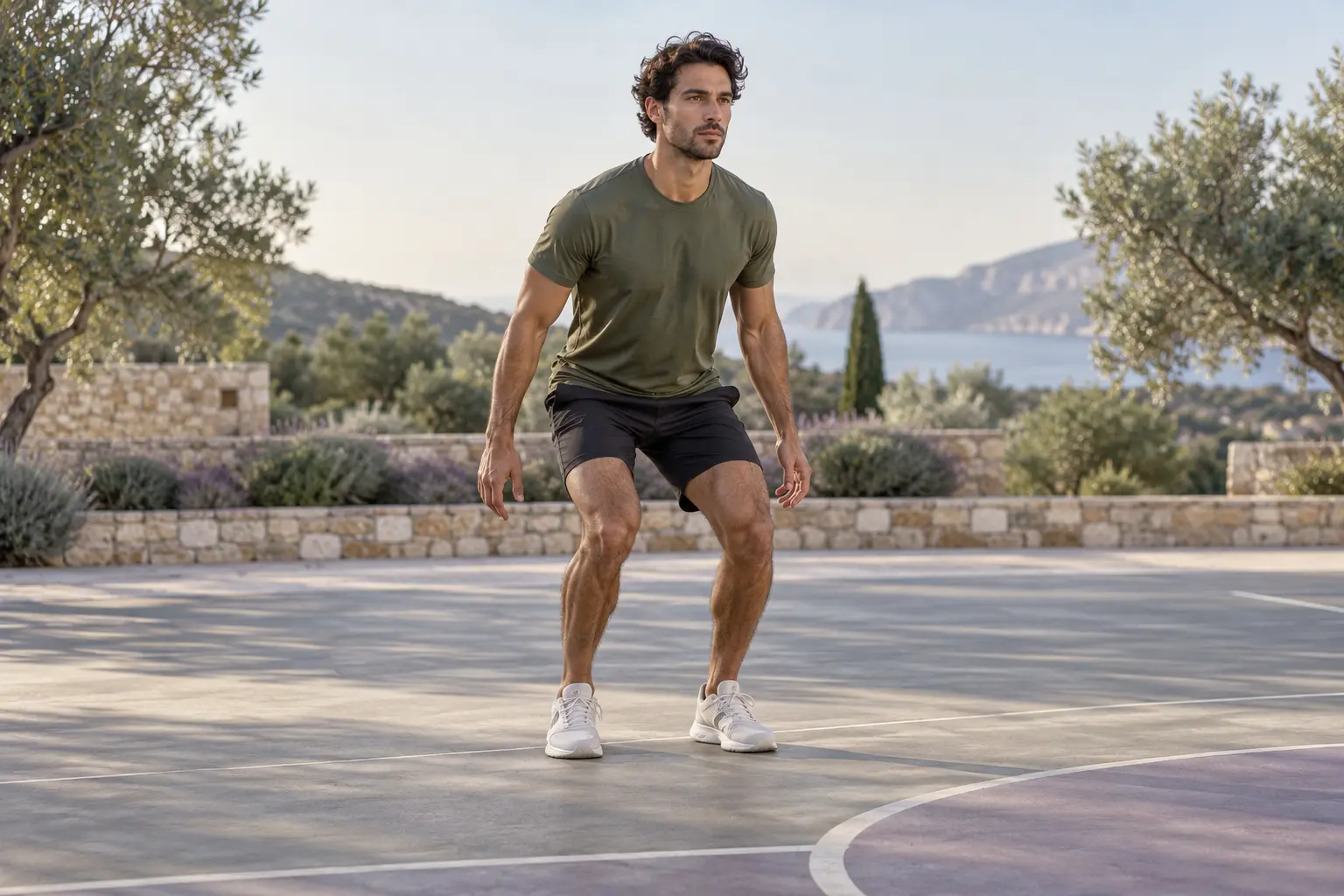
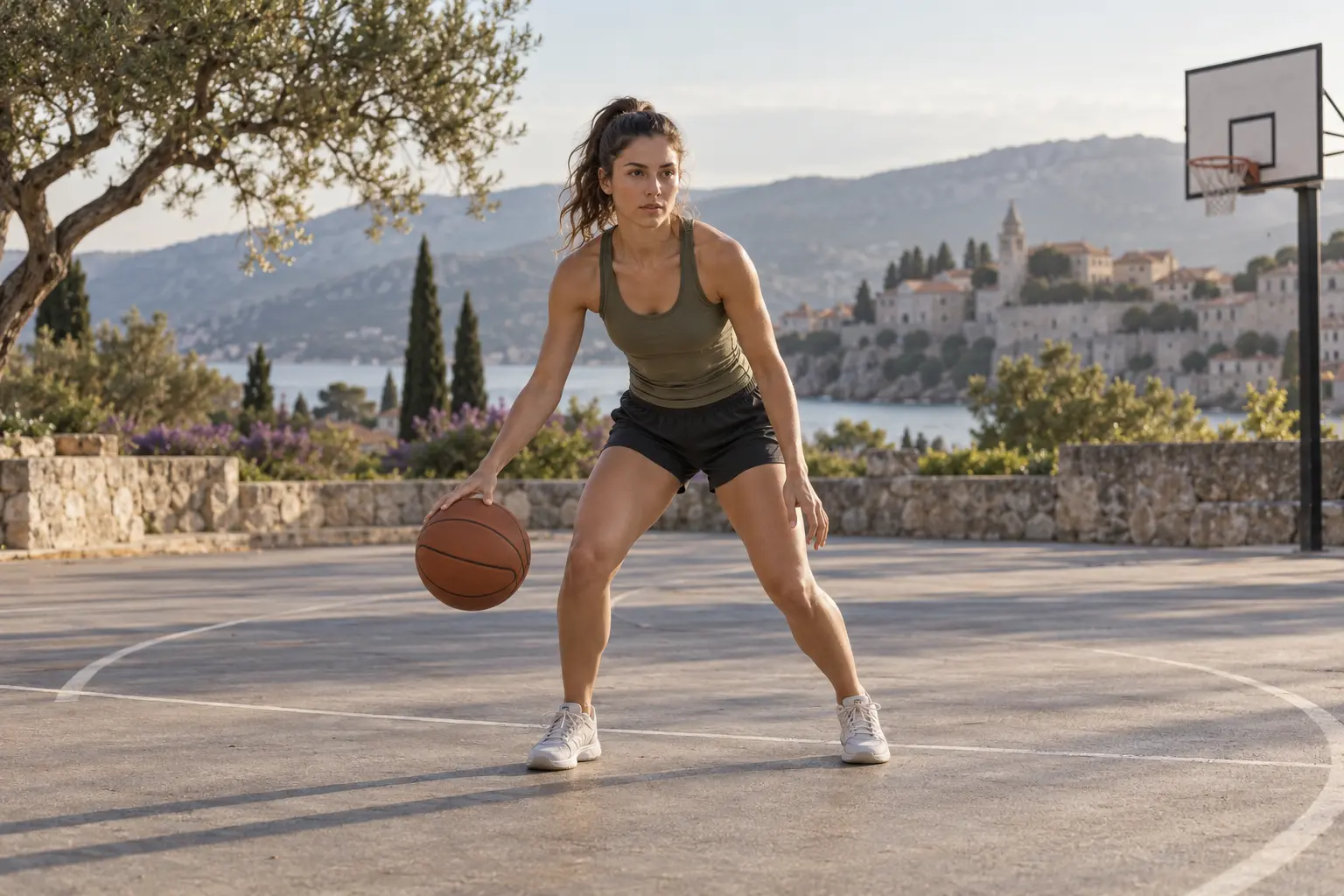
Prepare your workout
- Equipment
- Firm non-slip floor, Wall or fixed support and Clear space; No obstacles
- Before you choose
- Do not use slippery surfaces, furniture as jumping boxes or cramped rooms. If home conditions are unsuitable, choose home strength and jump in an appropriate space. For pain-free adult athletes with stable landings.
- Intensity
- Quality first: rest 60–90 s between jump sets, longer if needed. Count jumps in practices and games too. Initially allow 48 h between plyometric sessions.
- Warm-up
- Before the session, complete one gentle round of the three listed movements. Allow about 6 minutes for preparation, transitions and rehearsing the first exercise; extend this if needed. Then follow the session landing preparation before jumping. Do not add warm-up jumps or aim to become tired.
Duration is approximate. Prepare your equipment and take the indicated rests; needing more rest can make the workout longer.
PREPARE TO MOVEYour warm-up
Start with this gentle preparation before your working sets. The listed duration includes the warm-up.
Active walking
60–90 s at a comfortable pace
Choose a clear, safe area and start walking at a comfortable pace. Take regular steps with your arms moving naturally. Keep a pace that allows conversation and slow down to finish.
What you train: Warms up the body and trains arm-leg coordination while walking.
Watch video ↗Supported standing hip extension
1 × 5 gentle repetitions per side
Stand beside a firm support and hold it for stability. Move one leg slightly back without leaning your trunk. Return with control and complete the other side.
What you train: Strengthens the glutes through hip extension with a still trunk.
Watch video ↗Unloaded hip hinge
1 × 6 gentle repetitions
Stand a short distance in front of a wall, facing away, knees slightly bent. Send your hips back to lightly touch the wall as you hinge forward. Push through your feet to stand without moving them.
What you train: Teaches hip-back movement and trunk coordination before loaded hinging.
Watch video ↗
STEP BY STEP
Your complete workout
10 exercises01Supported ankle mobility
Prepare
1 × 5
How to do it- Place one foot near a wall with the whole sole grounded.
- Move your knee forward in line with your toes, keeping the heel down.
- Return slowly and repeat with the other ankle.
What it trainsTrains ankle mobility with the foot grounded.
- Rest
- Rest 30 s or longer until control returns.
- Tempo
- Controlled, without holding your breath
The movement, step by step
With your foot planted near a wall, move your knee forwards without lifting your heel. Return and repeat.
Technique cueStay within a comfortable range; your knee need not touch the wall.
Variations and mistakes to avoid
- More accessible
- Move your foot closer to the wall.
- To progress
- Move your foot slightly further away if you can keep your heel down.
- Avoid this mistake
- Forcing your ankle or rotating your foot to gain distance.
02Bodyweight squat
Prepare
1 × 5
How to do it- Stand with your feet comfortably apart.
- Bend your hips and knees with weight shared between both feet.
- Push through the floor and straighten your legs to stand.
What it trainsStrengthens legs and glutes and trains hip-knee coordination when lowering.
- Rest
- Rest 30 s or longer until control returns.
- Tempo
- Controlled, without holding your breath
The movement, step by step
Place your feet a comfortable width apart. Bend your hips and knees with your weight distributed across both feet, then stand back up.
Technique cueUse a range you can repeat slowly without momentum.
Variations and mistakes to avoid
- More accessible
- Do a shallow squat with firm support.
- To progress
- Add a brief pause at the bottom before using weight.
- Avoid this mistake
- Lifting your heels or letting your torso fall without control.
03Athletic landing position without a jump · basketball
Prepare
1 × 5
How to do it- Stand on a non-slip floor; slightly raise heels with forefeet grounded.
- Lower into an athletic stance by bending ankles, knees and hips without jumping.
- Hold steady for two seconds, then stand.
What it trainsTrains braking and a stable landing posture without jump impact.
- Rest
- Rest 30 s or longer until control returns.
- Tempo
- Controlled, without holding your breath
The movement, step by step
Stand, rise slightly onto your toes and lower into an athletic stance by bending ankles, knees and hips. Hold two seconds and reset.
Technique cueKeep knees following feet; there is no flight phase.
Variations and mistakes to avoid
- More accessible
- Reduce resistance and range; keep the movement comfortable and controlled.
- To progress
- Progress only one variable under supervision: a small increase in height, direction or single-leg support. Keep repetitions few and recovery complete.
- Avoid this mistake
- Letting your knees cave inward.
04Low two-foot pogos · basketball
Jumps
2 × 3
How to do it- Stand upright on both feet with knees slightly bent.
- Make very low ankle-driven rebounds, keeping your trunk upright.
- Count each rebound; stop at your session's total and recover fully.
What it trainsTrains quick ankle response with low rebounds and few contacts.
- Rest
- Rest 90 s or longer until control returns.
- Tempo
- Controlled, without holding your breath
The movement, step by step
With soft knees, make very low ankle-driven rebounds, trunk upright, up to the repetitions in your session. Each rebound counts as one repetition. Stop at the end of the set and recover fully.
Technique cueSeek low height and brief, controlled contacts.
Variations and mistakes to avoid
- More accessible
- Reduce resistance and range; keep the movement comfortable and controlled.
- To progress
- Progress only one variable under supervision: a small increase in height, direction or single-leg support. Keep repetitions few and recovery complete.
- Avoid this mistake
- Turning them into high jumps or continuing with Achilles pain.
05Countermovement vertical jump and hold · basketball
Jumps
2 × 3
How to do it- Stand on both feet with a clear landing space.
- Briefly bend hips and knees, then jump to a low height.
- Land on both feet, absorb through your legs and hold two seconds.
What it trainsCoordinates vertical push-off and a stable, cushioned landing.
- Rest
- Rest 90 s or longer until control returns.
- Tempo
- Controlled, without holding your breath
The movement, step by step
Briefly bend hips and knees and jump low. Land softly on both feet; hold two seconds before resetting.
Technique cueFinish each jump completely still; prioritise control over height.
Variations and mistakes to avoid
- More accessible
- Reduce resistance and range; keep the movement comfortable and controlled.
- To progress
- Progress only one variable under supervision: a small increase in height, direction or single-leg support. Keep repetitions few and recovery complete.
- Avoid this mistake
- Seeking maximum height before controlling the landing.
06Two steps and stable braking · basketball
Control and recovery
1 × 5
How to do it- Choose level, non-slip ground with enough stopping space.
- Take two moderate steps, then brake by bending ankles, knees and hips.
- Hold steady and walk back before repeating.
What it trainsTrains absorbing short-distance speed and finishing balanced.
- Rest
- Rest 30 s or longer until control returns.
- Tempo
- Controlled, without holding your breath
The movement, step by step
On level ground, take two moderate steps and brake by bending ankles, knees and hips. Hold a stable posture and walk back to reset.
Technique cueThis is two-step braking without jumping or maximum running speed.
Variations and mistakes to avoid
- More accessible
- Reduce resistance and range; keep the movement comfortable and controlled.
- To progress
- Progress only one variable under supervision: a small increase in height, direction or single-leg support. Keep repetitions few and recovery complete.
- Avoid this mistake
- Braking with stiff knees or accelerating too much.
07Supported calf-raise hold
Control and recovery
1 × 5
How to do it- Stand beside a firm support with weight shared between both feet.
- Raise both heels to a comfortable height for the prescribed hold.
- Breathe throughout and lower your heels slowly.
What it trainsTrains calf endurance through a stationary heel-raise hold.
- Rest
- Rest 30 s or longer until control returns.
- Tempo
- Controlled, without holding your breath
The movement, step by step
Raise your heels with stable support and hold a comfortable position for a few seconds. Lower slowly.
Technique cueFinish before you start losing ankle stability.
Variations and mistakes to avoid
- More accessible
- Keep both feet supported and shorten the hold.
- To progress
- Alternate placing a little more weight on each leg.
- Avoid this mistake
- Holding until you lose control of your ankle.
08Lateral step and stop on cue · basketball
Control and recovery
1 × 5
How to do it- Take an athletic stance with clear space on both sides.
- On your own or a partner's cue, take one short sideways step.
- Stop steadily without crossing feet and reset for the next cue.
What it trainsTrains a first lateral response step and controlled stop.
- Rest
- Rest 30 s or longer until control returns.
- Tempo
- Controlled, without holding your breath
The movement, step by step
From an athletic stance, take one short lateral step and stop steadily. Use your own or a partner's signal to choose the side.
Technique cueKeep knees following feet; this is a step rather than a jump.
Variations and mistakes to avoid
- More accessible
- Reduce resistance and range; keep the movement comfortable and controlled.
- To progress
- Progress only one variable under supervision: a small increase in height, direction or single-leg support. Keep repetitions few and recovery complete.
- Avoid this mistake
- Crossing your feet or losing alignment.
09Gentle calf stretch
Control and recovery
1 × 5
How to do it- Place hands on a wall and step one foot back, both feet facing forward.
- Bend the front knee while keeping the rear heel grounded.
- Hold gentle calf tension, return slowly and change sides.
What it trainsGently stretches the calf with stable support.
- Rest
- Rest 30 s or longer until control returns.
- Tempo
- Controlled, without holding your breath
The movement, step by step
Place your hands on a wall and step one foot back. Keep your back heel on the floor and gently bend your front knee until you feel a light stretch. Switch sides.
Technique cueBreathe normally and hold without bouncing.
Variations and mistakes to avoid
- More accessible
- Bring your back foot closer and reduce your lean.
- To progress
- Hold a comfortable position for a few seconds longer without seeking more tension.
- Avoid this mistake
- Forcing the stretch or lifting your back heel.
10Calm standing breathing
Control and recovery
1 × 5
How to do it- Stand with feet firm, knees relaxed and shoulders down.
- Breathe in comfortably without shrugging or maximally filling your lungs.
- Exhale slowly and repeat the cycles in your session.
What it trainsPractises calm standing breathing and awareness of chest and rib movement.
- Rest
- Rest 30 s or longer until control returns.
- Tempo
- Controlled, without holding your breath
The movement, step by step
With feet firm and knees relaxed, inhale without shrugging and exhale slowly. Complete five comfortable cycles.
Technique cueUse a natural rhythm without forcing air in or out.
Variations and mistakes to avoid
- More accessible
- Reduce resistance and range; keep the movement comfortable and controlled.
- To progress
- Once you complete the prescribed amount with control, add one or two repetitions; then slightly increase resistance.
- Avoid this mistake
- Becoming dizzy through breathing too fast.
Sign in or create your free account to ask Sergio. Read replies in Account → Messages.
FINISH THE SESSIONFinish and prepare your next step.
Walk slowly and breathe comfortably for 2–3 minutes. Allow at least one recovery day before repeating hard strength work for the same muscle group.
How to progress
Start with two weekly sessions or fewer according to sporting load. Improve control before adding reps. If combining with strength, perform plyometrics after warming up and before strength; separate days are also possible.
Open workout in the app →General routines for adults. If you have a health condition, an injury, are pregnant or have medical instructions, consult your professional before starting and ask for adaptations. Stop if you experience pain, dizziness or unusual breathlessness.