The essentials
- A jump includes take-off, flight and landing.
- Start with predictable situations before adding opposition.
- Video supports discussion; it does not diagnose an injury.
Watch what happens afterwards too
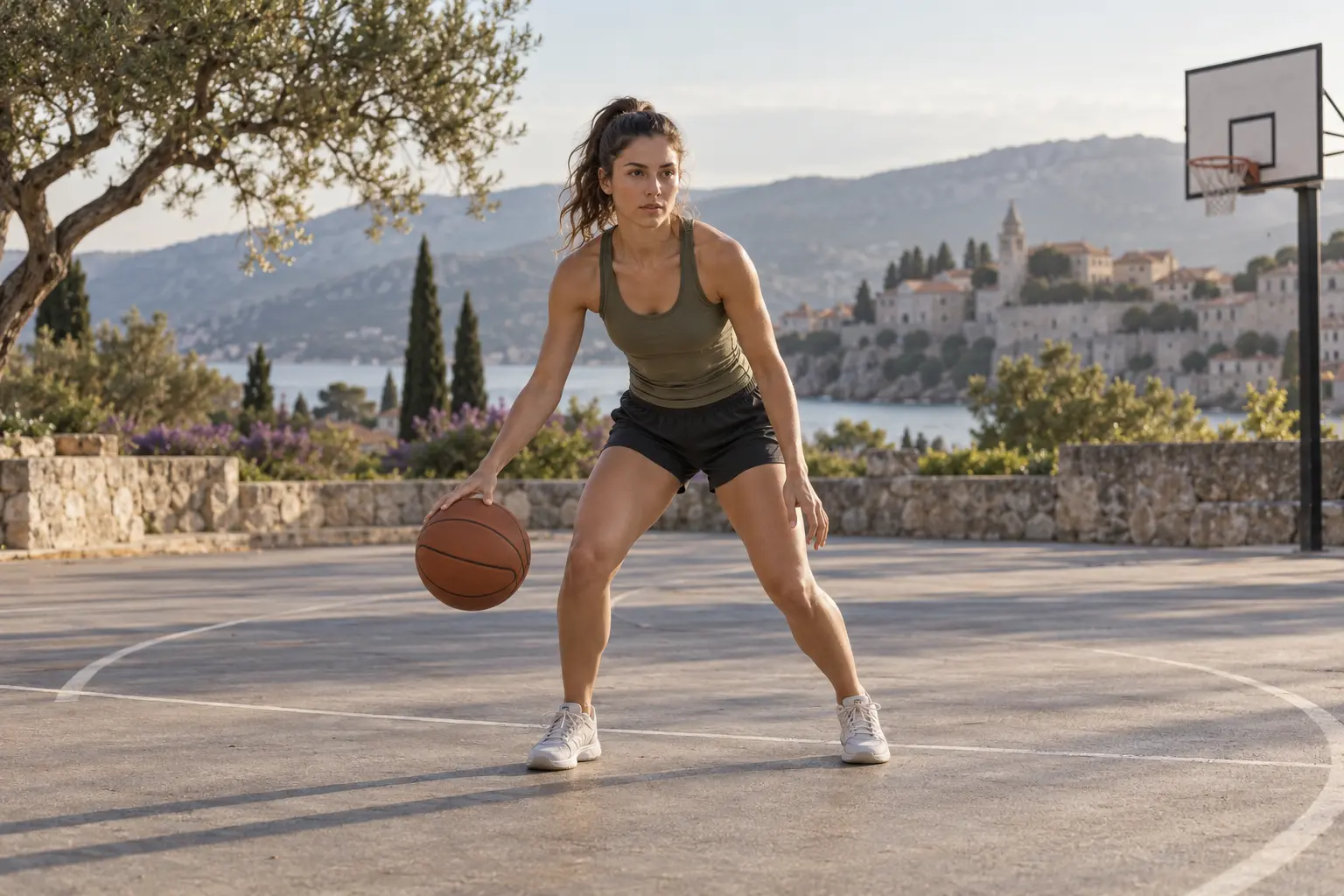
Reaching the ball matters in a rebound, but the play continues when you return to the floor. Can you stabilise? Can you see your teammates? Are you ready to protect the ball or take the first step? If you only celebrate height, you can overlook a useful part of learning.
FIBA's coaching manual includes jump landings among the tasks worth observing in physical preparation. It suggests looking at how force is absorbed, foot support and the ability to repeat the movement. These points guide teaching; an isolated observation does not predict who will get injured.
Building a landing
- Prepare
A simple situation and clear space.
- Land
Absorb the landing and regain stability.
- Connect
Add a pass or the next action.
- Progress
Change one challenge with supervision.
Add difficulty in layers
A simple editorial progression starts with a low, predictable landing, then adds a comfortable jump and later links it to a basketball action. Height, speed, the ball and opposition are separate challenges. You do not need to increase them all at once.
For example, in work agreed with your coach, receive the ball from a stable position and then make the intended pass. If adding a jump makes the landing uncontrollable, simplify the task. Do not turn a coordination problem into a contest to reach ever higher. The right level lets you practise and understand what you are doing.
Film with a specific question
If you use video, choose a useful angle and one question: “Can I stay stable when I return to the floor?” or “Where is the ball as I prepare the pass?” Review a few repetitions and try again with one clear cue. Recording without a purpose creates footage, but not necessarily learning.
Match fatigue and contact add complexity; there is no need to recreate them in the first session. Coordinate physical-preparation jumps with those in court training. Pain, instability or a recent injury needs individual assessment, not a generic correction taken from someone else's video.
Sources and context
Check the original documents and their dates. News, general guidance and a research study do not always answer the same question.
Educational summary prepared with AI assistance and linked sources. It is not a medical review or an individual prescription. Read our editorial standards.
Your circumstances matter.
Sergio helps you turn your goals into training you can maintain. In person in Valencia and with online coaching.
Explore coaching with Sergio